
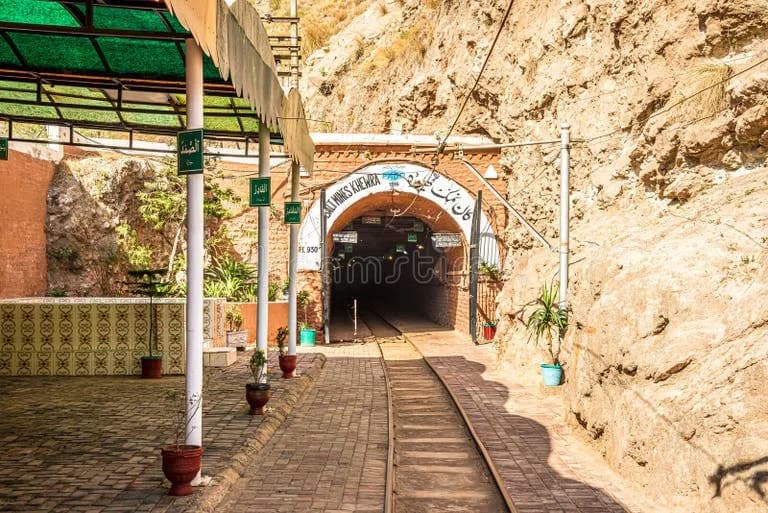
Khewra Salt Mine visitor entrance, Khewra, Jhelum District, Punjab
GPS: 32.6479389° N, 73.0083944° E. Open in Google Maps
The Salt Range and its historical importance
The Salt Range is a fold-and-thrust belt in northern Punjab where ancient seabeds were buried, compressed, and lifted during the collision of the Indian and Eurasian plates. Thick halite (rock salt) layers appear close to the surface across these hills, giving the range its name. Read our Salt Range guide and geology page for the wider regional context.
For centuries before modern industry, communities across Punjab and beyond traded salt from these deposits. Salt was essential for food preservation, animal husbandry, and regional commerce. Khewra became the deepest and most developed working mine in the range, though other salt operations exist at Warcha, Kalabagh, and elsewhere in Pakistan.
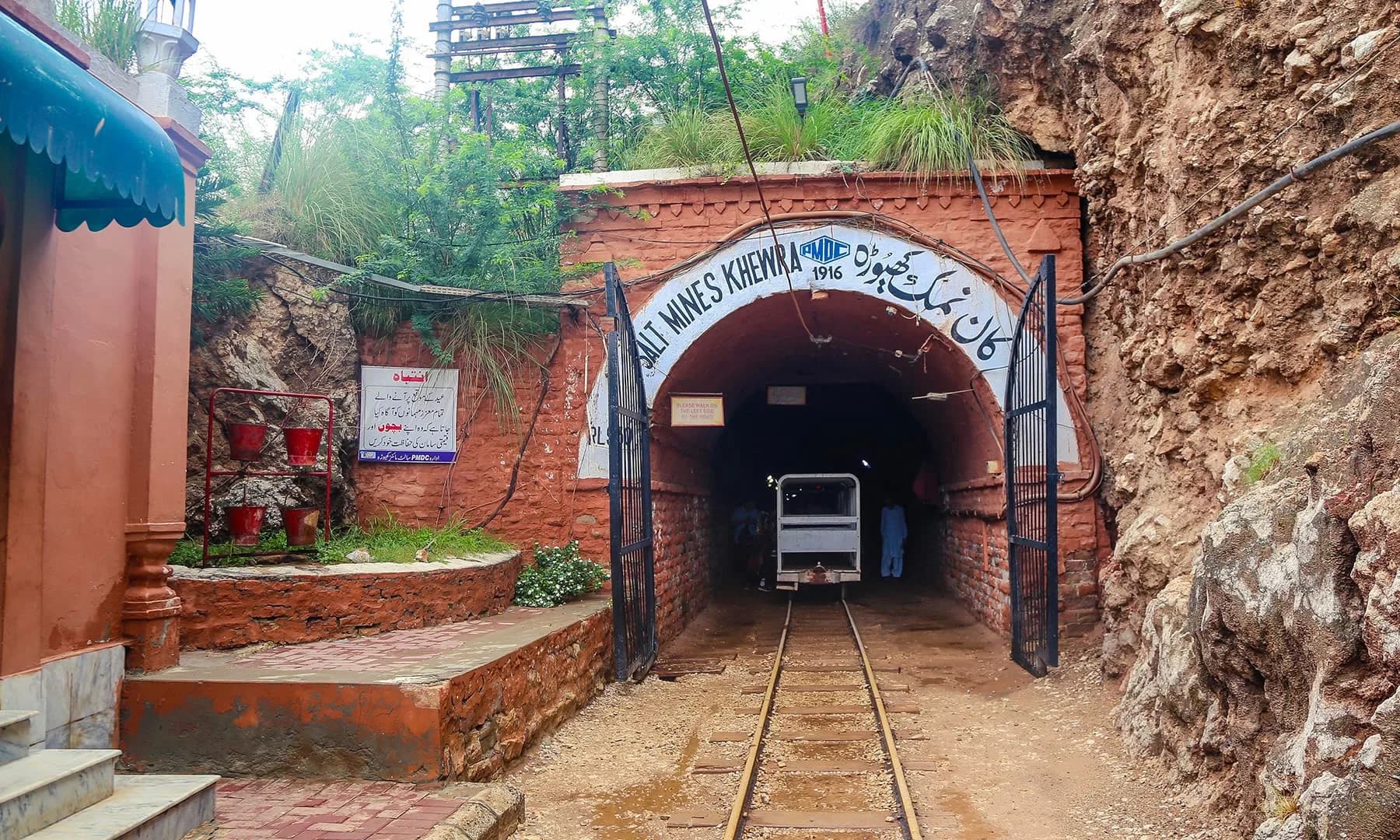
Khewra town in Pind Dadan Khan Tehsil, Jhelum District, grew around mining activity. The visitor entrance today sits at the base of the Salt Range foothills, roughly 3 km from Khewra railway station on the main Khewra to Chakwal road.
The traditional account of discovery
The traditional account states that around 320 BC, Alexander the Great's cavalry rested in the Salt Range during his eastward campaign. His horses are said to have licked exposed salt on rock outcrops, leading soldiers to dig and find thick deposits beneath the surface.
PMDC retells this story on plaques and in visitor briefings at the mine. Archaeologists and historians generally treat it as local folklore tied to the region's ancient salt trade, not as documented fact. No contemporary Greek or Indian text independently confirms the event.
The 320 BC date aligns with Alexander's known movements through Punjab, but that alone does not establish proof. Historical sources differ on how awareness of the deposit first entered written records. For a focused discussion of legend versus colonial records, see our discovery guide.
Medieval and pre-colonial extraction
According to commonly cited historical accounts, organised salt extraction under regional rulers began in the 13th century. Local communities used hand tools and shallow shafts. Output was modest compared to later tunnel networks, but trade routes carried rock salt across Punjab and into neighbouring regions.
Pre-colonial methods did not reach the depth or scale of modern room-and-pillar mining. Salt from the range supplied kitchens and preserved food long before British engineers arrived. The Salt Range name reflects extraction across multiple hills, not only at Khewra.
Written records from this period are thinner than colonial documentation. Where medieval dates are cited, they should be understood as commonly reported rather than precisely verified in every detail.
British-era development and the Mayo Salt Mine
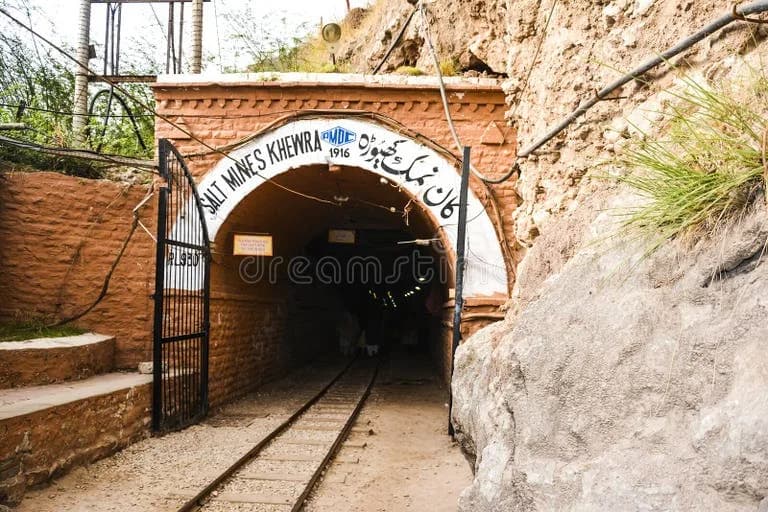
In 1872, British mining engineer Dr H. Warth surveyed the Khewra deposit and introduced room-and-pillar tunnel mining. His geological maps identified the salt dome structure and established extraction levels still referenced in modern operations.
Under British administration the site was also known as the Mayo Salt Mine, named after the Earl of Mayo. Colonial records document increased output, rail links for salt transport, and harsh labour conditions. A major strike in 1876 protested forced work and low wages, one of the earliest organised labour actions at the site.
Warth's engineering transformed Khewra from small-scale extraction into an industrial operation. Tunnel layouts from this period form the basis of both active mining zones and the tourist chambers visitors walk through today.
Post-1947 and PMDC management
After Pakistan's independence in 1947, control of the mine passed through several arrangements before coming under the Pakistan Mineral Development Corporation. PMDC lists Khewra among its salt-mining operations in Jhelum District.
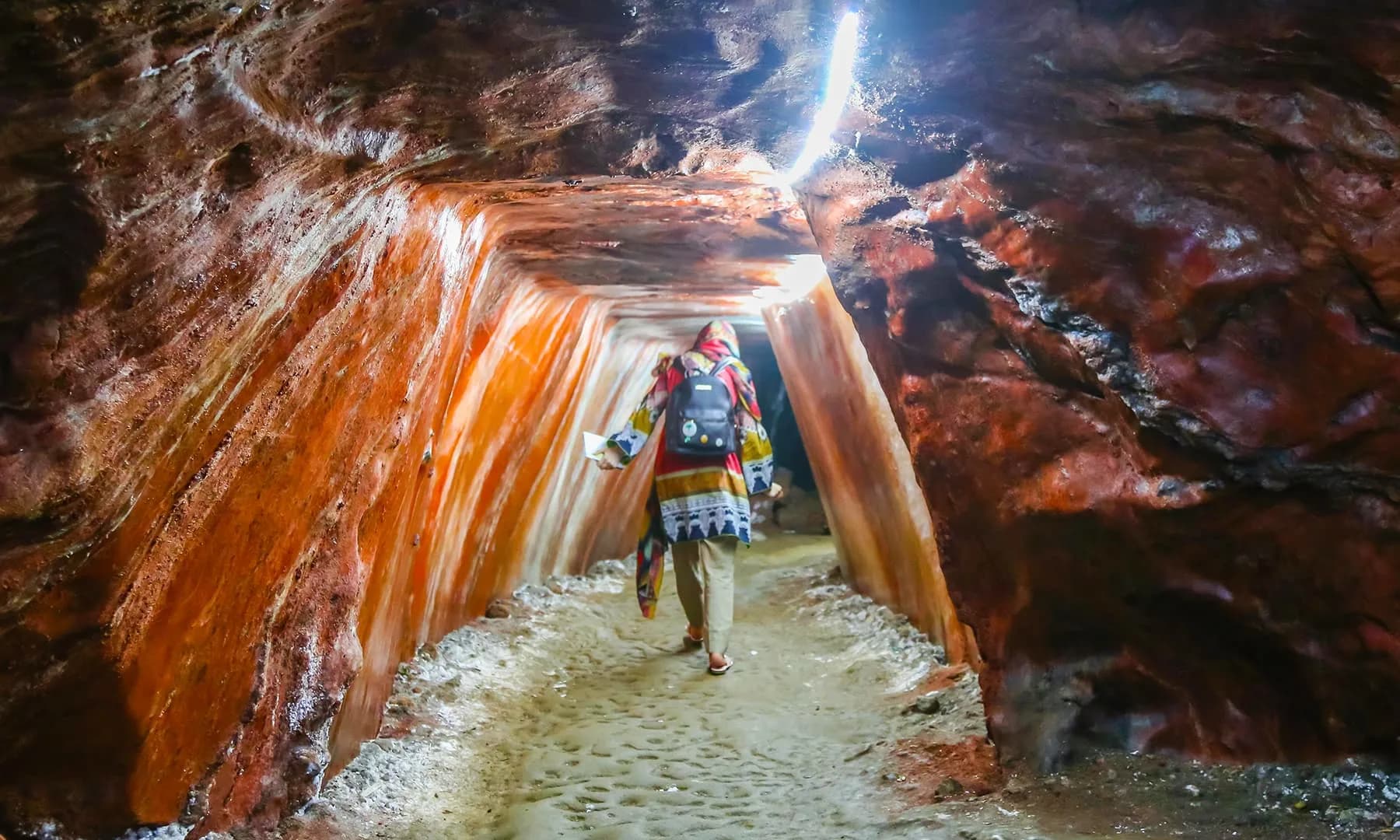
PMDC expanded industrial output, built processing facilities, and developed the public tourist section. The visitor route through exhausted upper-level chambers opened in the 1980s and has since become a major domestic tourism draw.
Today PMDC manages industrial mining, salt processing, and visitor operations at the mine gate. School groups, families, and foreign tourists use a route separate from active blasting zones deeper in the mountain.
Evolution of mining methods
Room-and-pillar mining remains the dominant method at Khewra. Miners cut chambers and leave salt pillars to support the roof. This design limits surface subsidence compared with total-extraction methods used in some other mines worldwide.
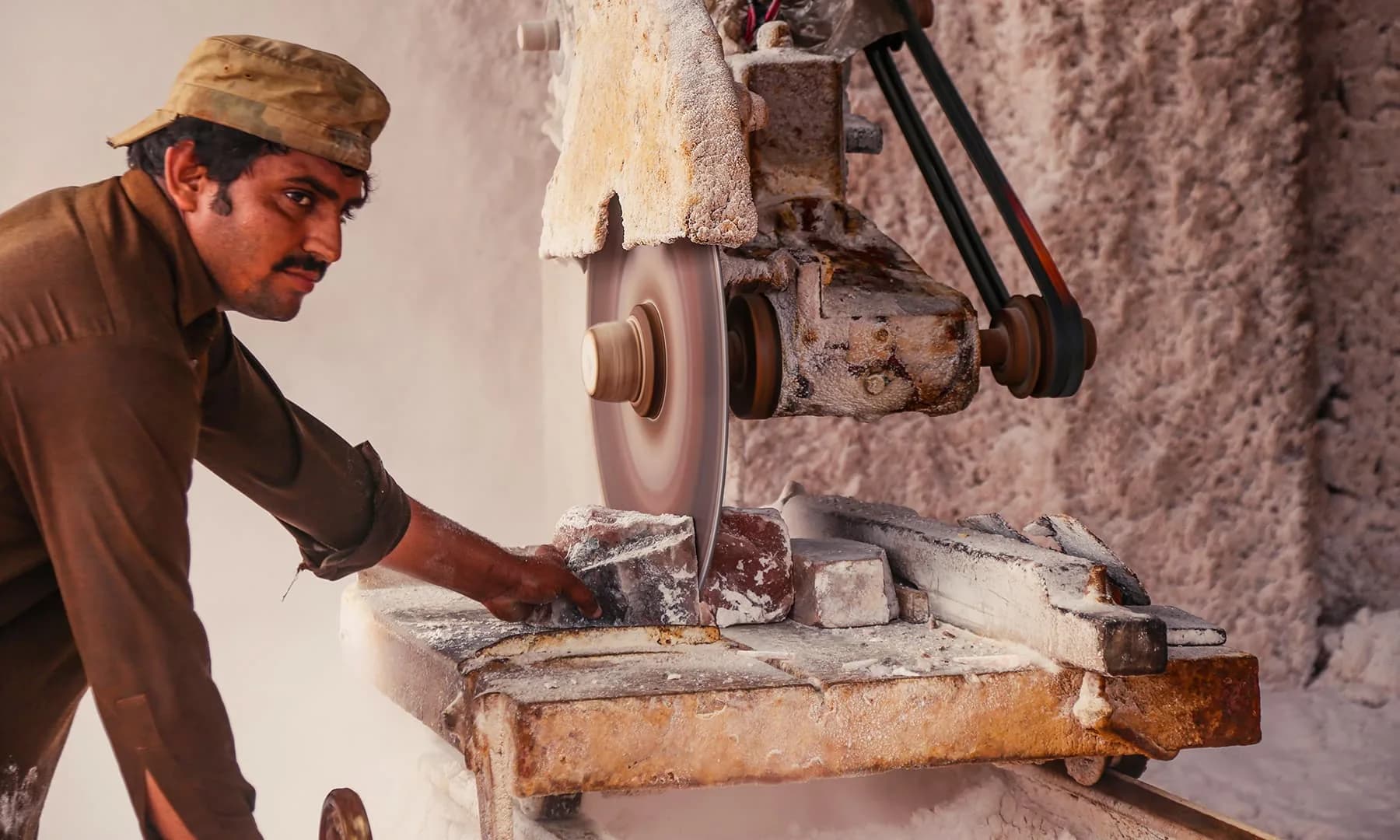
Early colonial work relied on hand tools and basic rail haulage. Modern operations use controlled blasting, electric trains, and mechanised crushing at surface processing plants. Tourist tunnels are lit and maintained separately from active industrial levels.
The mine is commonly reported to span multiple working levels with tunnel networks extending over 40 km, though only a small fraction is open to the public. Industrial mining reaches depths of approximately 730 metres; tourist access covers far shallower, exhausted chambers.
Modern mining and tourism
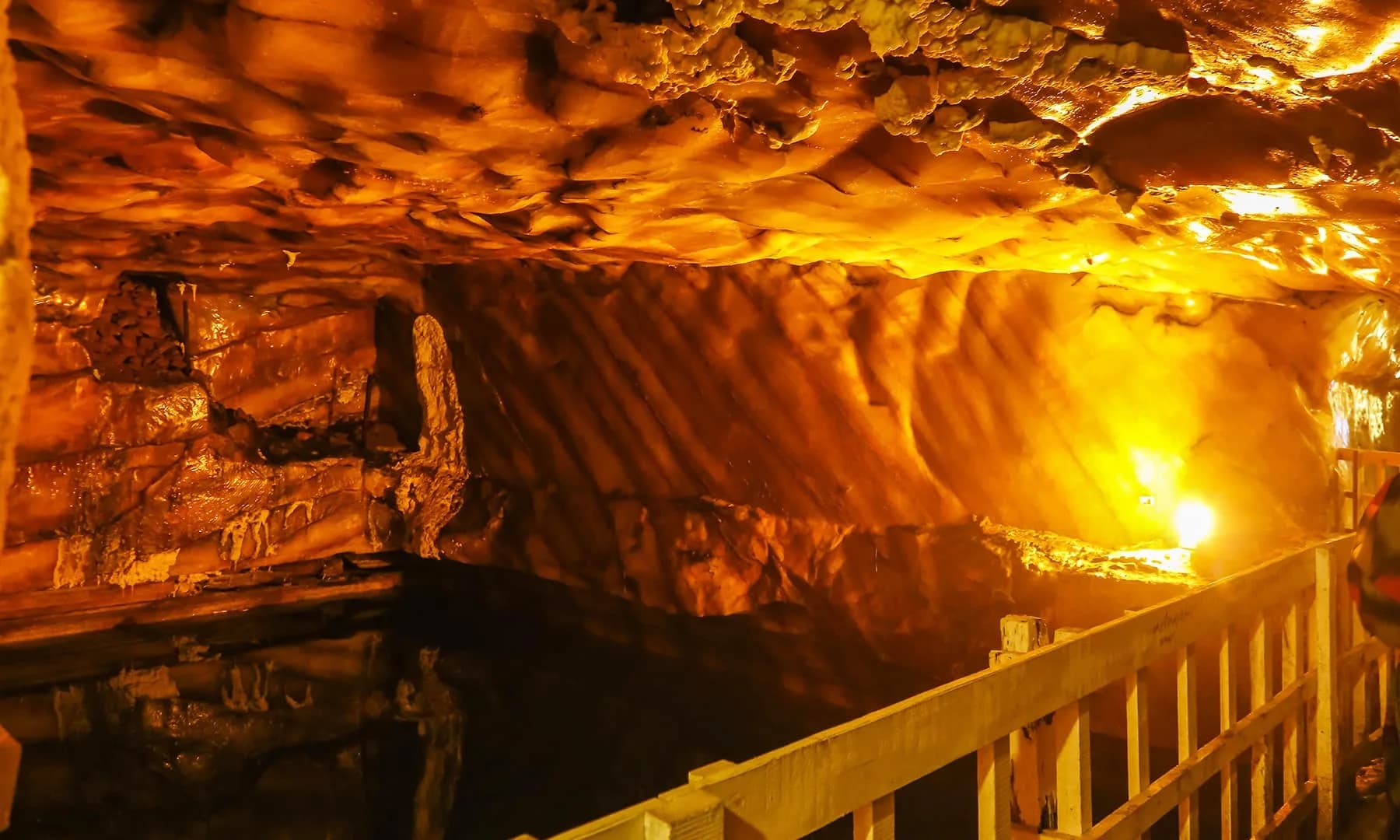
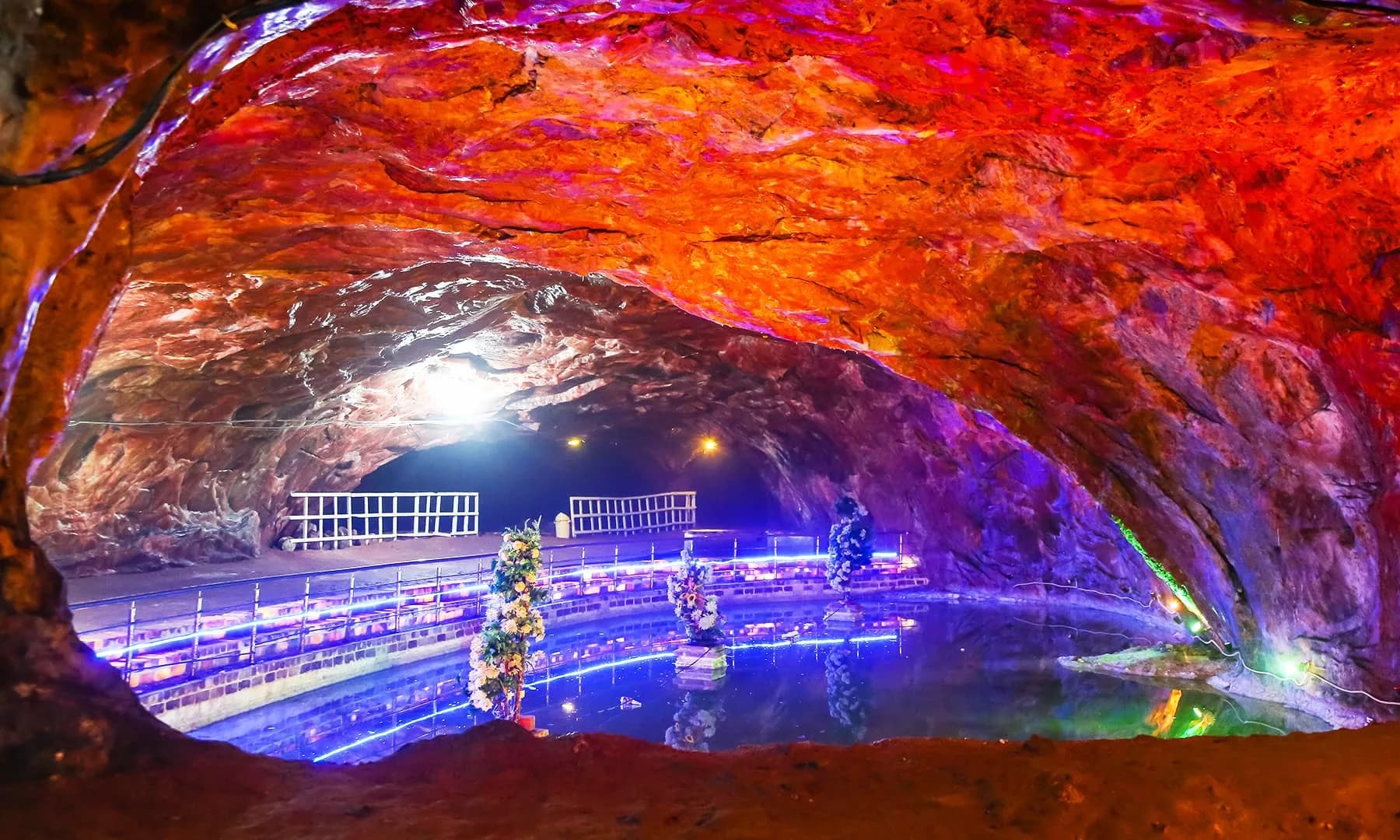
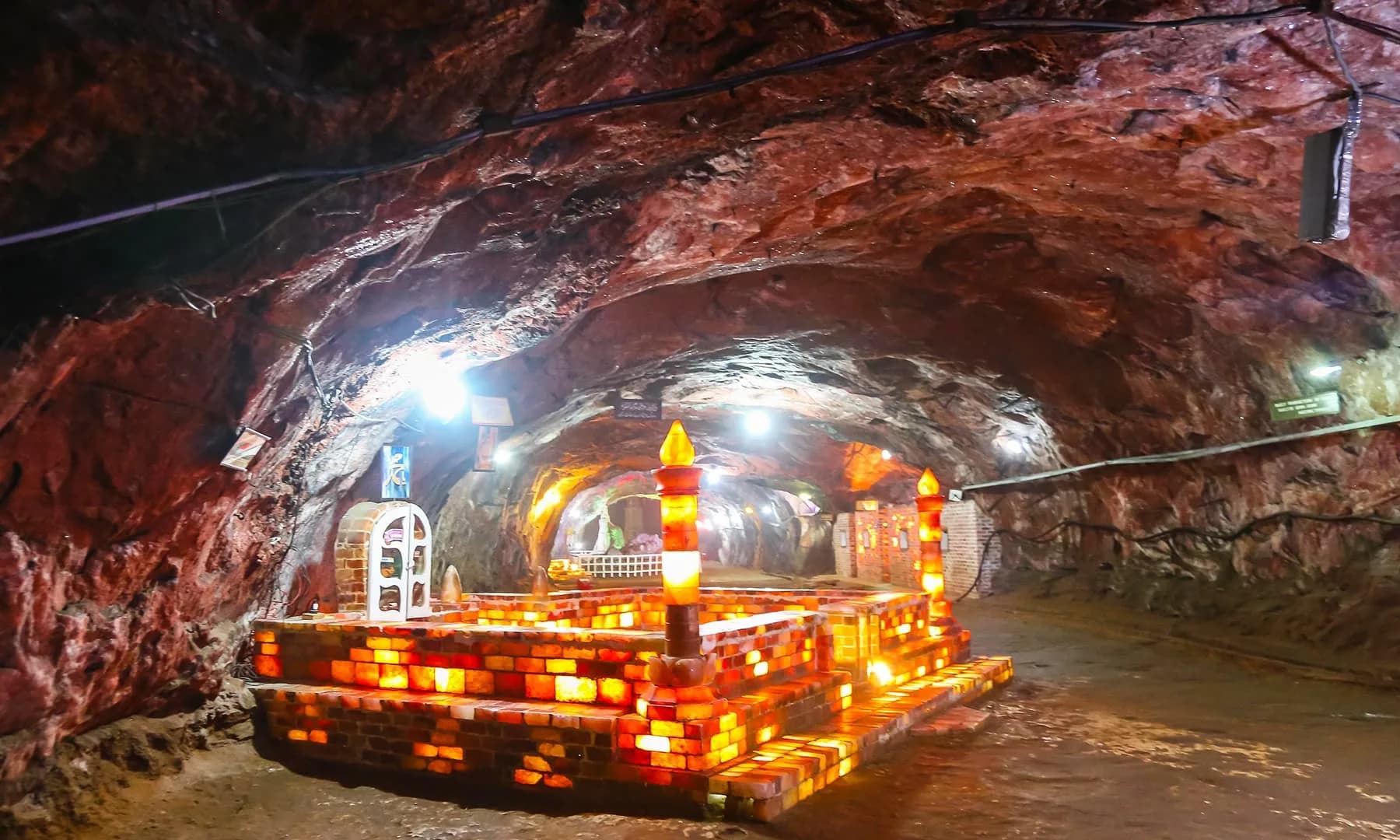
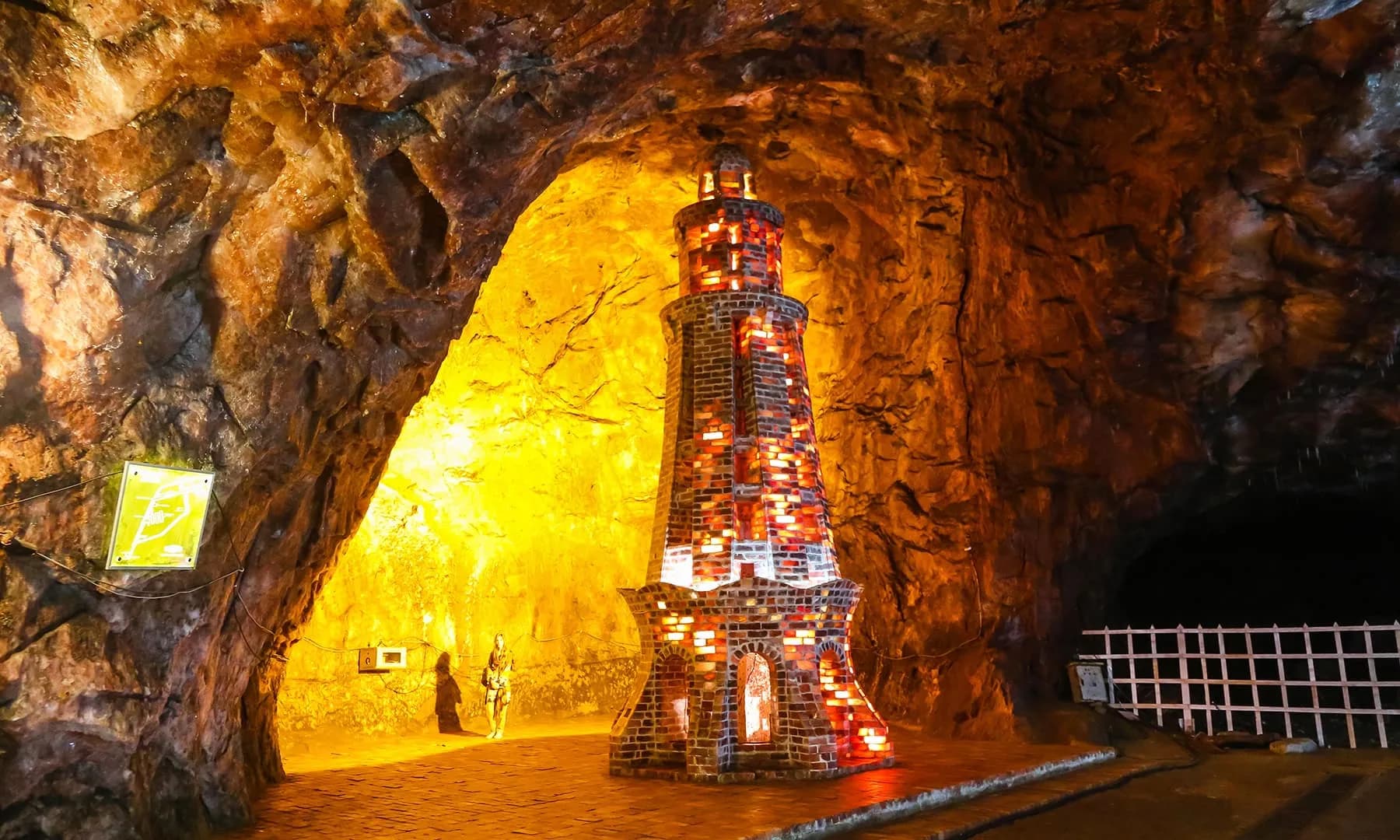
Khewra remains a working mine, not a museum. Industrial zones produce rock salt for domestic markets and export. The tourist section showcases chambers carved by miners over decades, including the Badshahi Mosque replica, Sheesh Mahal, and an underground brine lake.
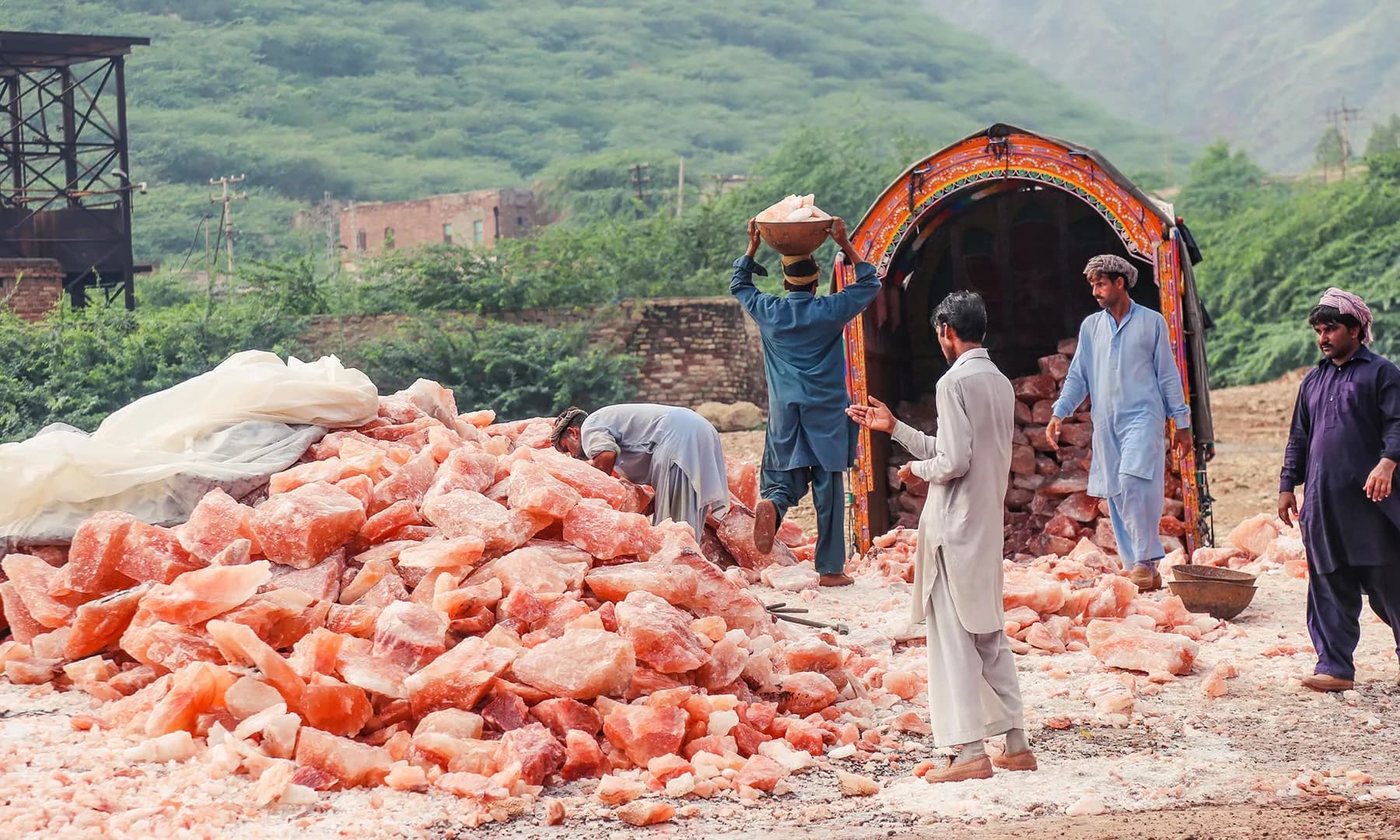
Annual production figures appear in PMDC and industry reports but vary by year and product grade; we do not quote a fixed tonne total here. Khewra remains among Pakistan's largest rock salt operations by scale. Visitor numbers are substantial but seasonal; PMDC does not publish one authoritative annual headcount on this independent website.
For what the tour covers underground, see inside the mine. For geological formation of the deposit, see Khewra pink rock salt.
Historical milestones
The table below lists milestones commonly cited in PMDC and geological literature. Dates marked as tradition are not established historical fact.
- ~320 BC (tradition): local account of Alexander's army encountering salt
- 13th century (commonly cited): organised extraction under regional rulers
- 1872: Dr H. Warth begins systematic British-era mining
- 1876: major labour strike against colonial working conditions
- 1947: Pakistan independence; mine transitions to national control
- 1970s-1980s: PMDC develops public tourist route through upper chambers
- Present: PMDC manages industrial mining and visitor operations at Khewra
Sources
More in History
Related guides
Frequently asked questions
When was Khewra Salt Mine discovered?
Who discovered Khewra Salt Mine?
What was the mine called under British rule?
When did PMDC take over Khewra Salt Mine?
How old is Khewra Salt Mine?
Is the Alexander discovery story true?
What is the historical importance of Khewra salt?
Planning a visit?
Practical visitor information for Khewra Salt Mine in Punjab, Pakistan.
Plan your visit