Directions to Khewra Salt Mine
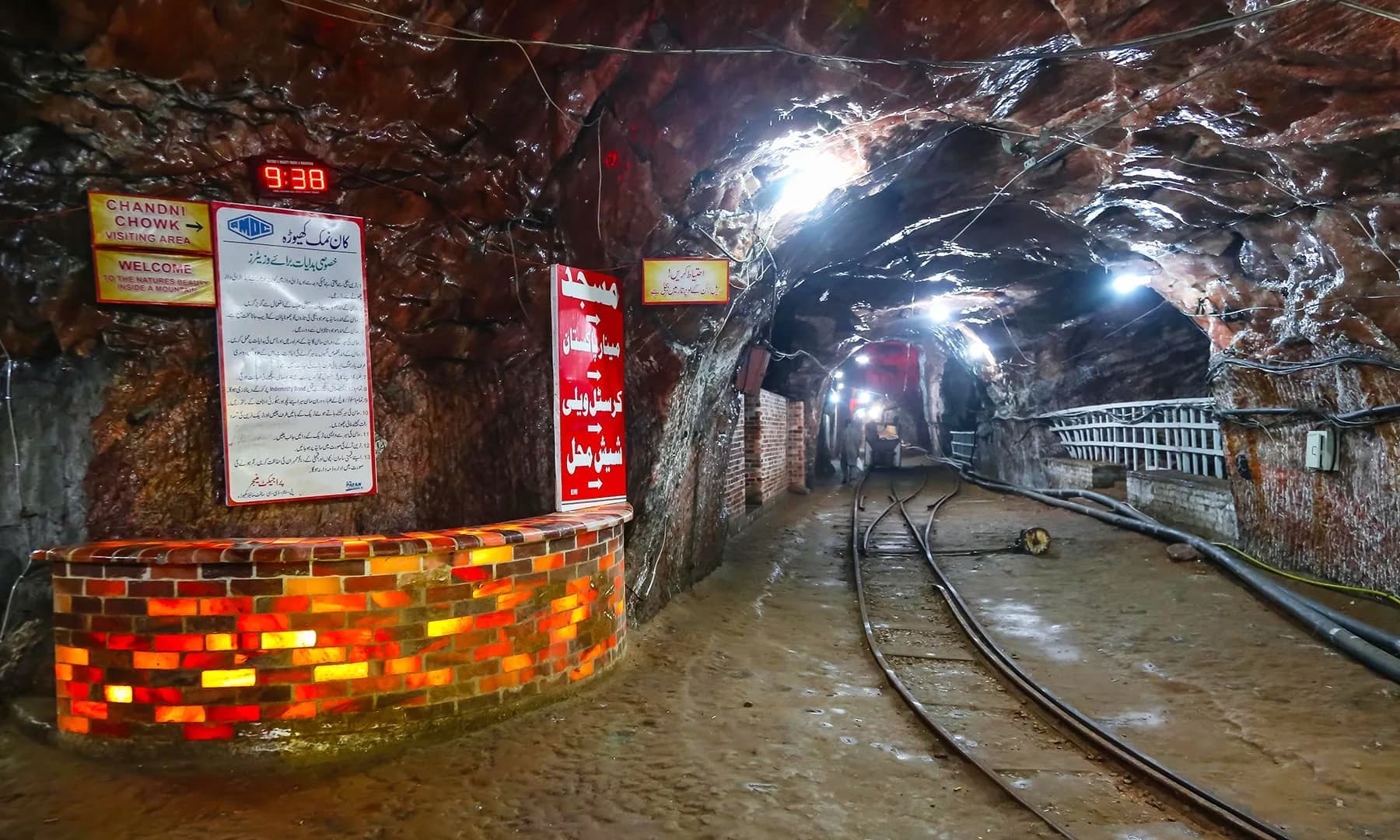
Khewra Salt Mine visitor entrance, Khewra, Jhelum District, Punjab
GPS: 32.6479389° N, 73.0083944° E. View Khewra Salt Mines on Google Maps
Open driving directions from your city:
- Lahore, Punjab. Opens Google Maps directions to Khewra Salt Mines.
- Islamabad, Islamabad Capital Territory. Opens Google Maps directions to Khewra Salt Mines.
- Rawalpindi, Punjab. Opens Google Maps directions to Khewra Salt Mines.
- Faisalabad, Punjab. Opens Google Maps directions to Khewra Salt Mines.
- Multan, Punjab. Opens Google Maps directions to Khewra Salt Mines.
- Karachi, Sindh. Opens Google Maps directions to Khewra Salt Mines.
- Peshawar, Khyber Pakhtunkhwa. Opens Google Maps directions to Khewra Salt Mines.
- Gujranwala, Punjab. Opens Google Maps directions to Khewra Salt Mines.
- Sialkot, Punjab. Opens Google Maps directions to Khewra Salt Mines.
- Murree, Punjab. Opens Google Maps directions to Khewra Salt Mines.
- Jhelum, Punjab. Opens Google Maps directions to Khewra Salt Mines.
- Chakwal, Punjab. Opens Google Maps directions to Khewra Salt Mines.
Each link opens Google Maps with driving directions to the Khewra Salt Mines visitor entrance. For route notes on this site, see our location guide and city distance pages.
What is Khewra pink rock salt?
Khewra pink rock salt is natural halite extracted from underground tunnels at Khewra Salt Mine. It is the same mineral species as ordinary table salt — sodium chloride — with trace amounts of iron oxide and other minerals that tint some crystals pink, red, or orange.
Retail products often use the label Himalayan pink salt. Khewra is a primary Pakistani source of this rock salt, though similar deposits exist across the Salt Range. The colour is geological, not added during processing.
This page covers formation, mining, and product types. It does not discuss health or medical uses. For mine history, see Khewra Salt Mine history.
How pink rock salt formed in the Salt Range
The Salt Range formed when ancient seabeds were buried and compressed during the Himalayan orogeny — the collision of the Indian and Eurasian tectonic plates. Evaporated seawater left thick halite layers that were later folded and thrust upward.
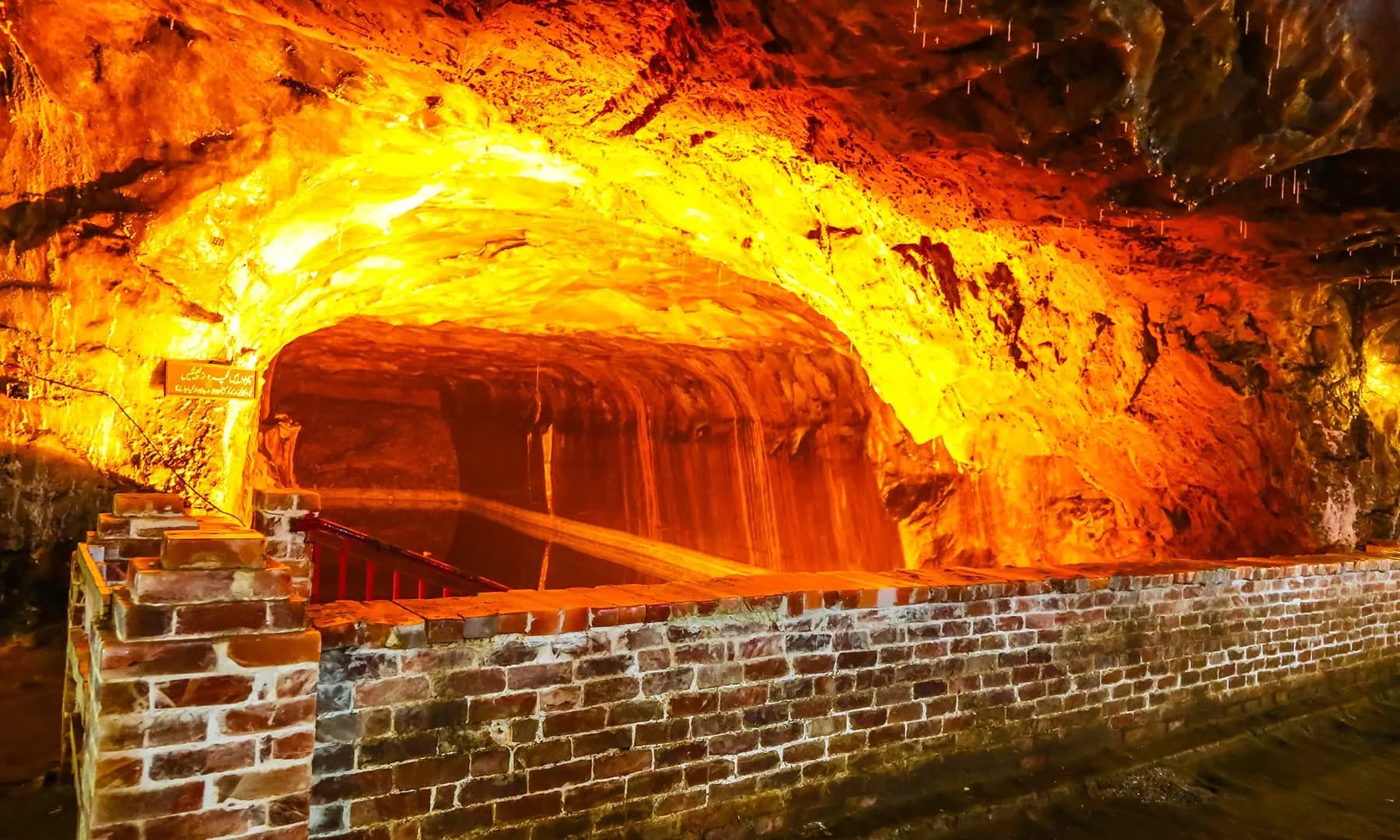
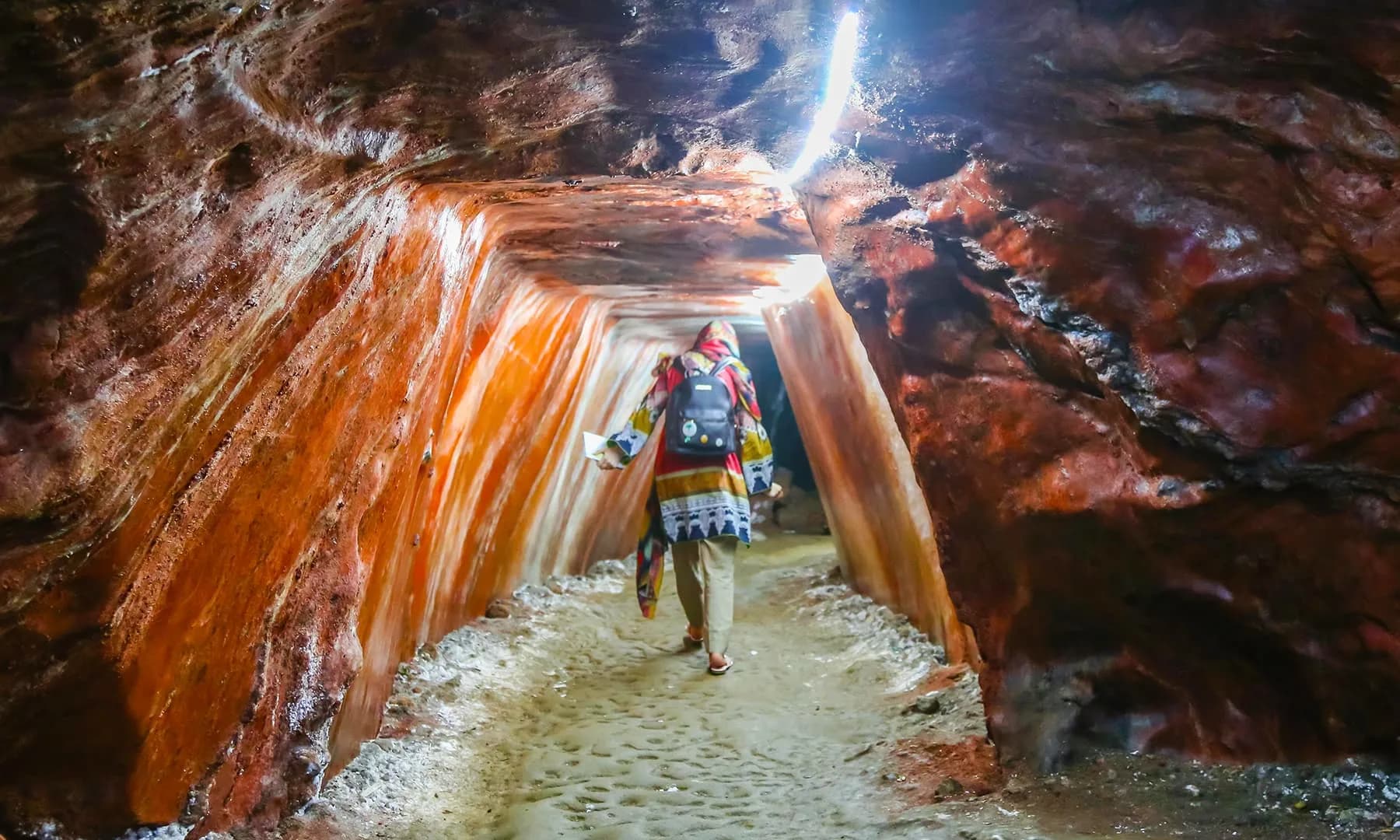
Khewra sits on a salt dome where halite rose close to the surface. Pink, white, and reddish bands in tunnel walls reflect variations in trace mineral content, mainly iron oxide. Colour variation does not change the basic chemistry: it remains rock salt.
The Geological Survey of Pakistan has published Salt Range bulletins mapping these strata. Similar halite deposits appear at other sites in the range, but Khewra's tunnel network is the most developed in Pakistan.
Why Khewra salt has different colours
Pink and reddish tones come from iron oxide traces embedded in halite crystals during geological formation. White bands in the same tunnel wall are chemically similar halite with fewer colour-causing minerals.
Miners and processors sort salt partly by colour for market preference. Edible pink salt is washed, dried, and graded. Decorative lamp blocks are chosen for size, colour intensity, and carving quality rather than chemistry alone.
Colour alone is not a reliable indicator of mineral composition without laboratory analysis. This website does not make claims about purity, nutrition, or therapeutic properties.
How rock salt is mined at Khewra
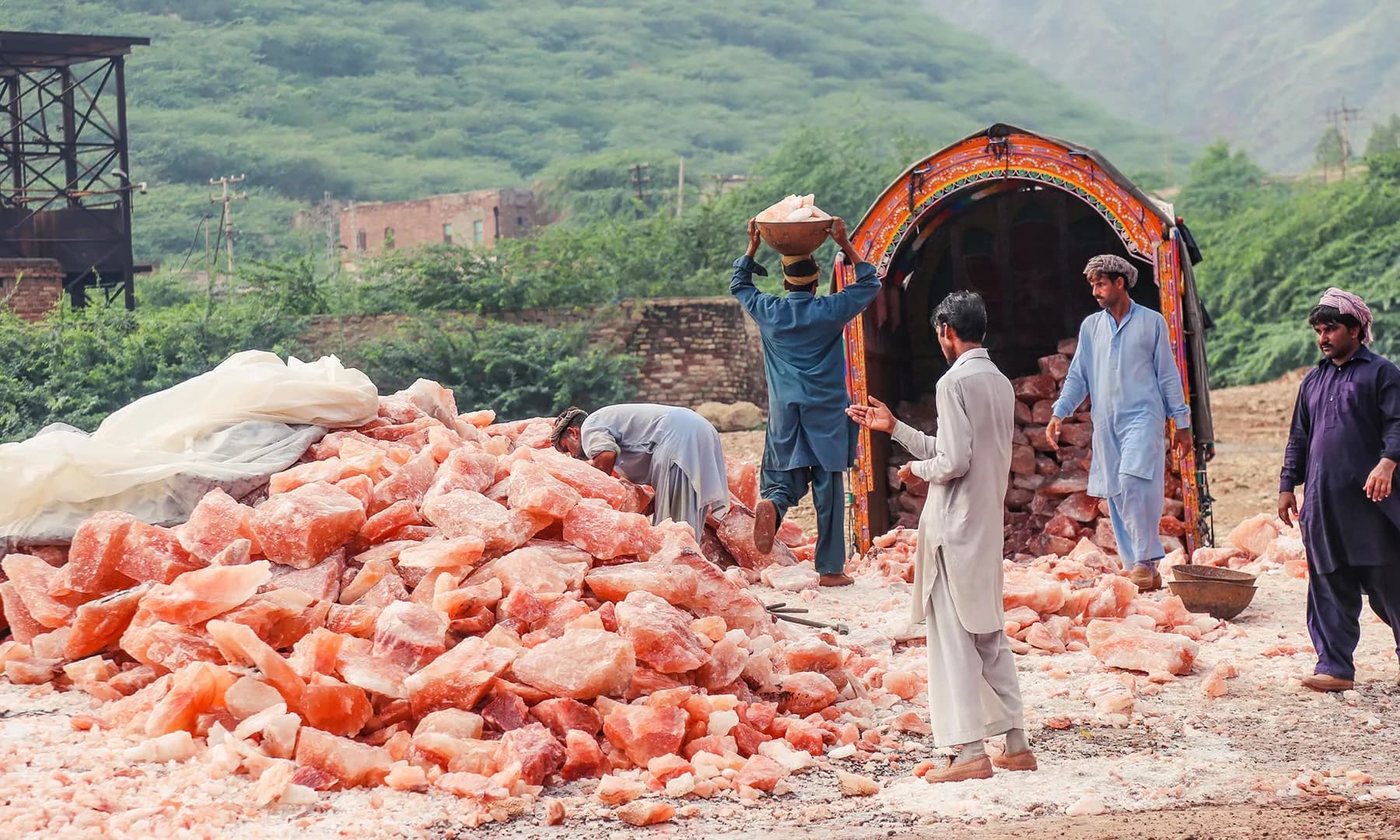
PMDC uses room-and-pillar mining at Khewra. Miners cut chambers and leave salt pillars to support the roof. Extracted rock is hauled to surface processing plants near the mine entrance.
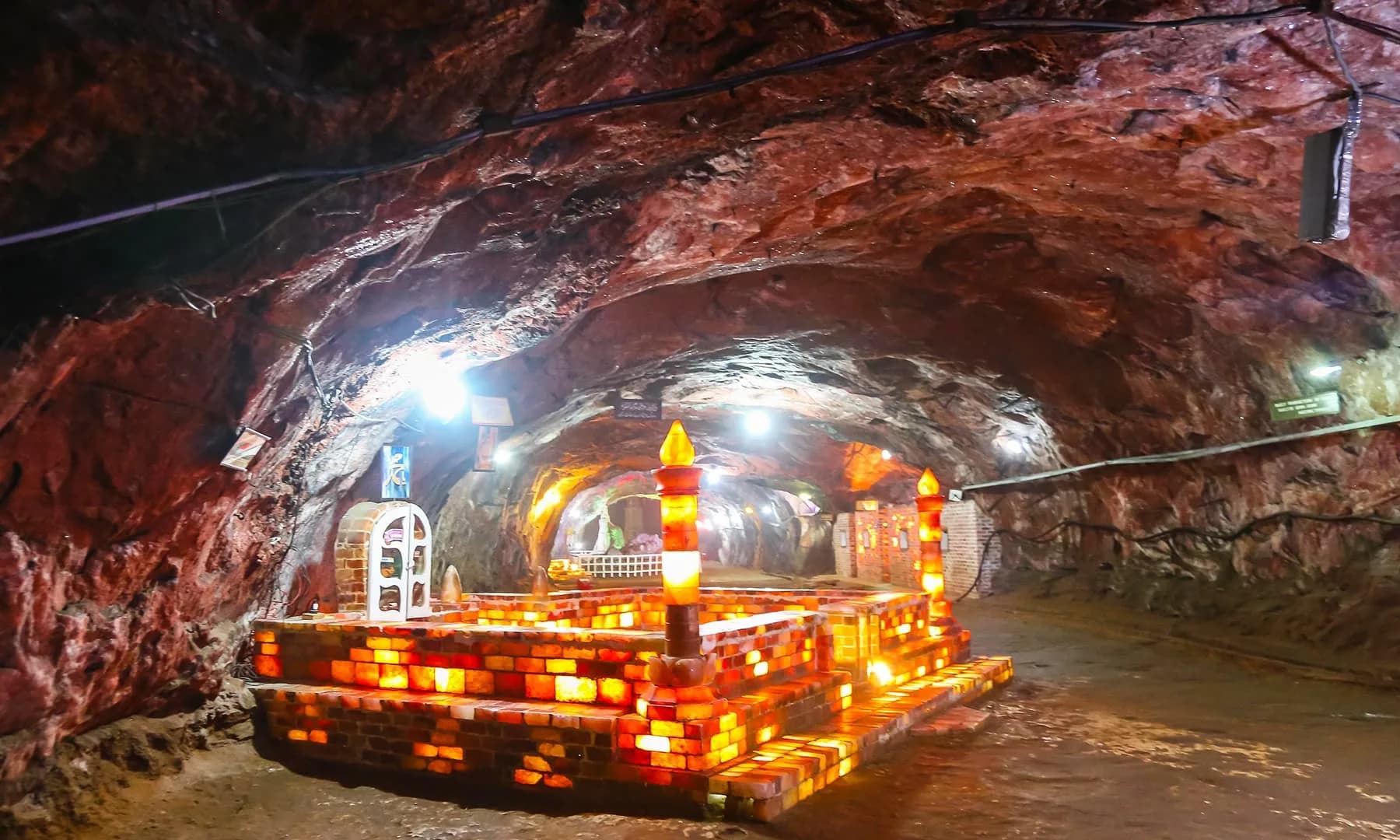
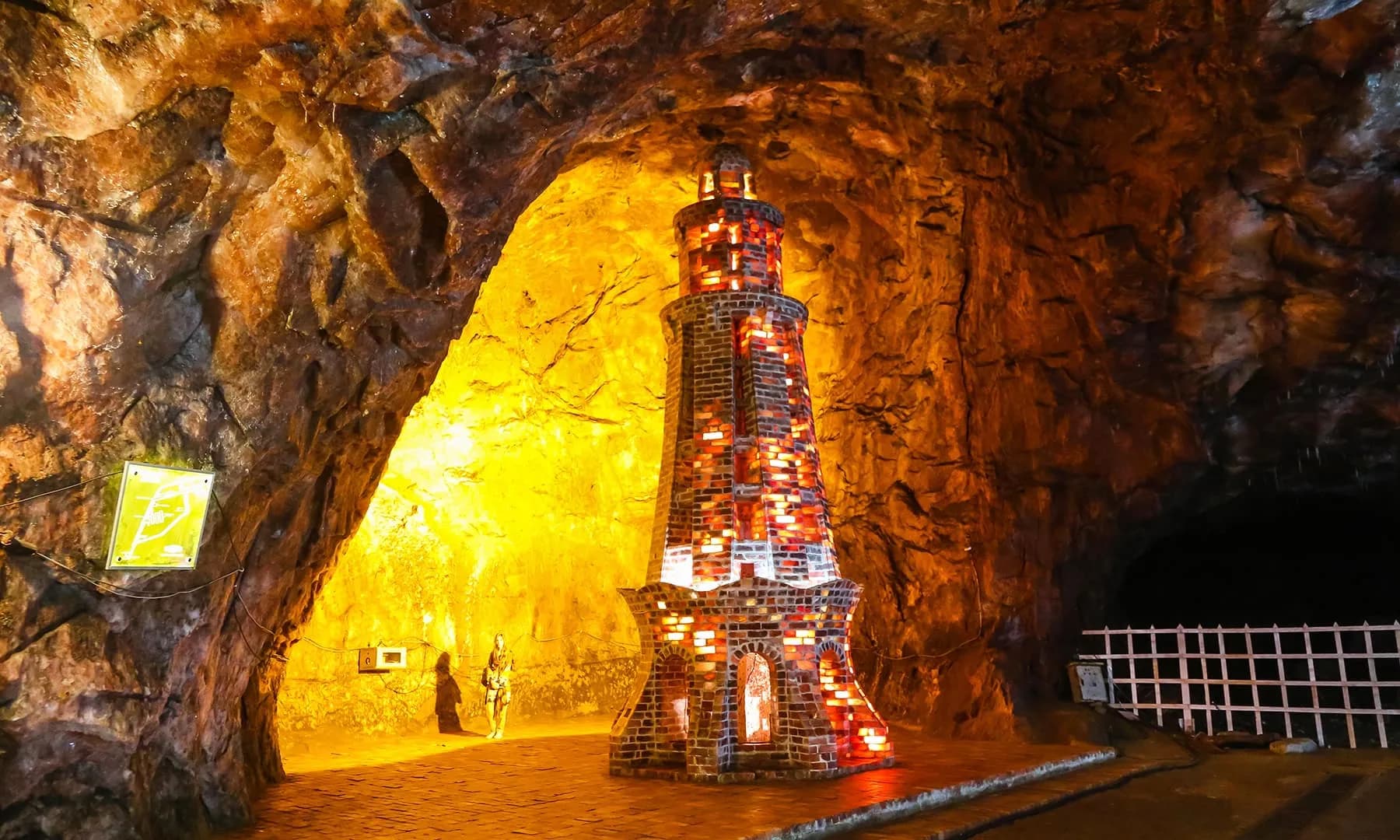
Pink, white, and industrial grades are crushed, screened, and bagged for different markets. Tourist tunnels show the same salt layers visitors see in gift-shop products, though industrial output comes from active levels not open to the public.
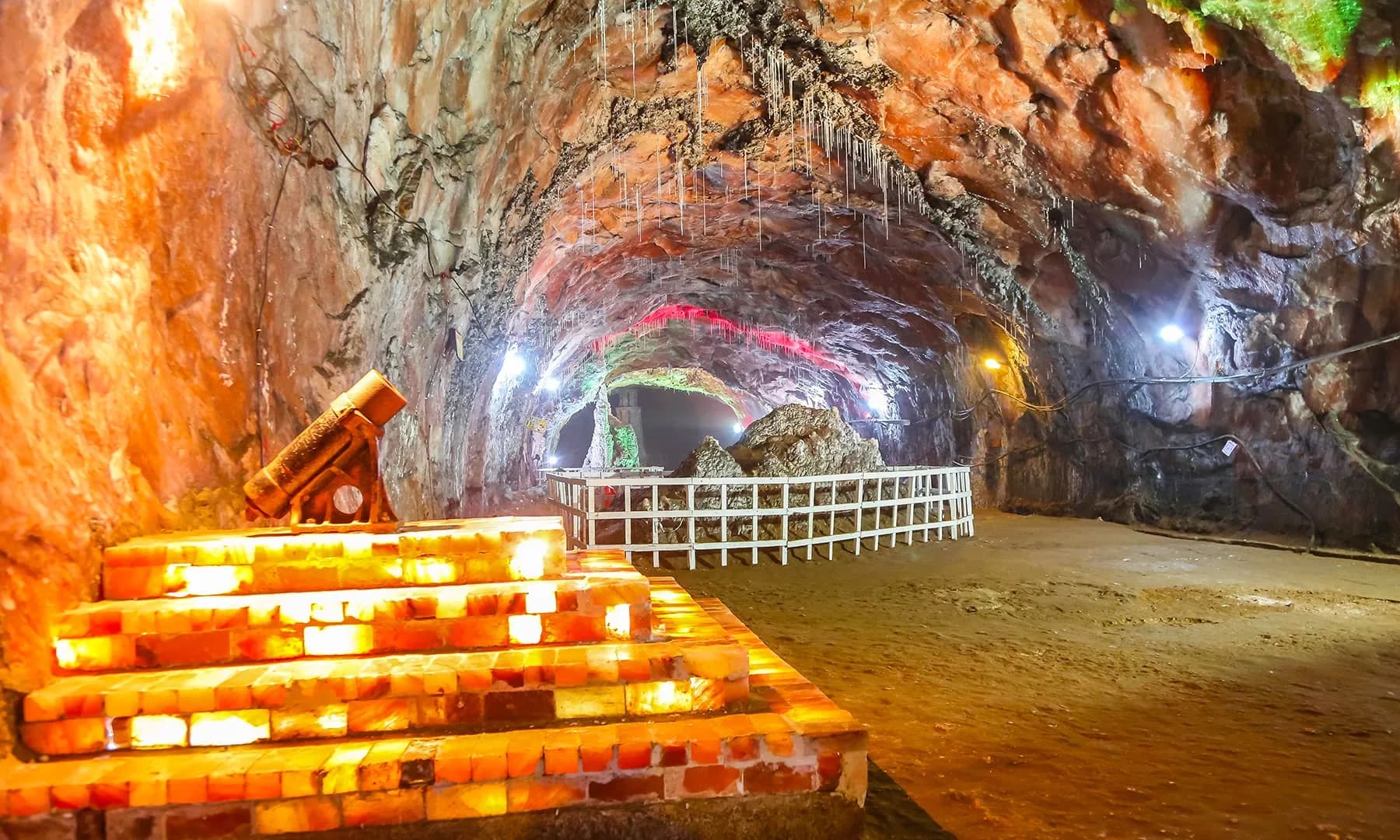
For a chamber-by-chamber description of the tourist route, see inside the mine. For production overview, see ecosystem and mining.
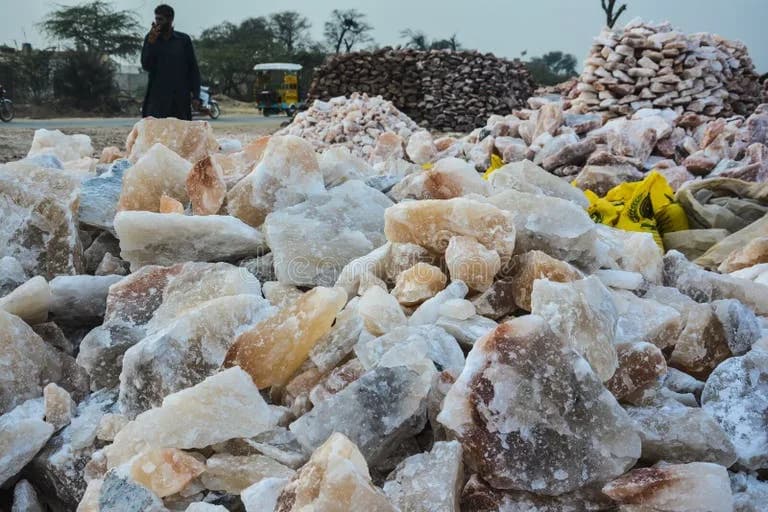
Pink, white, reddish, and kala namak
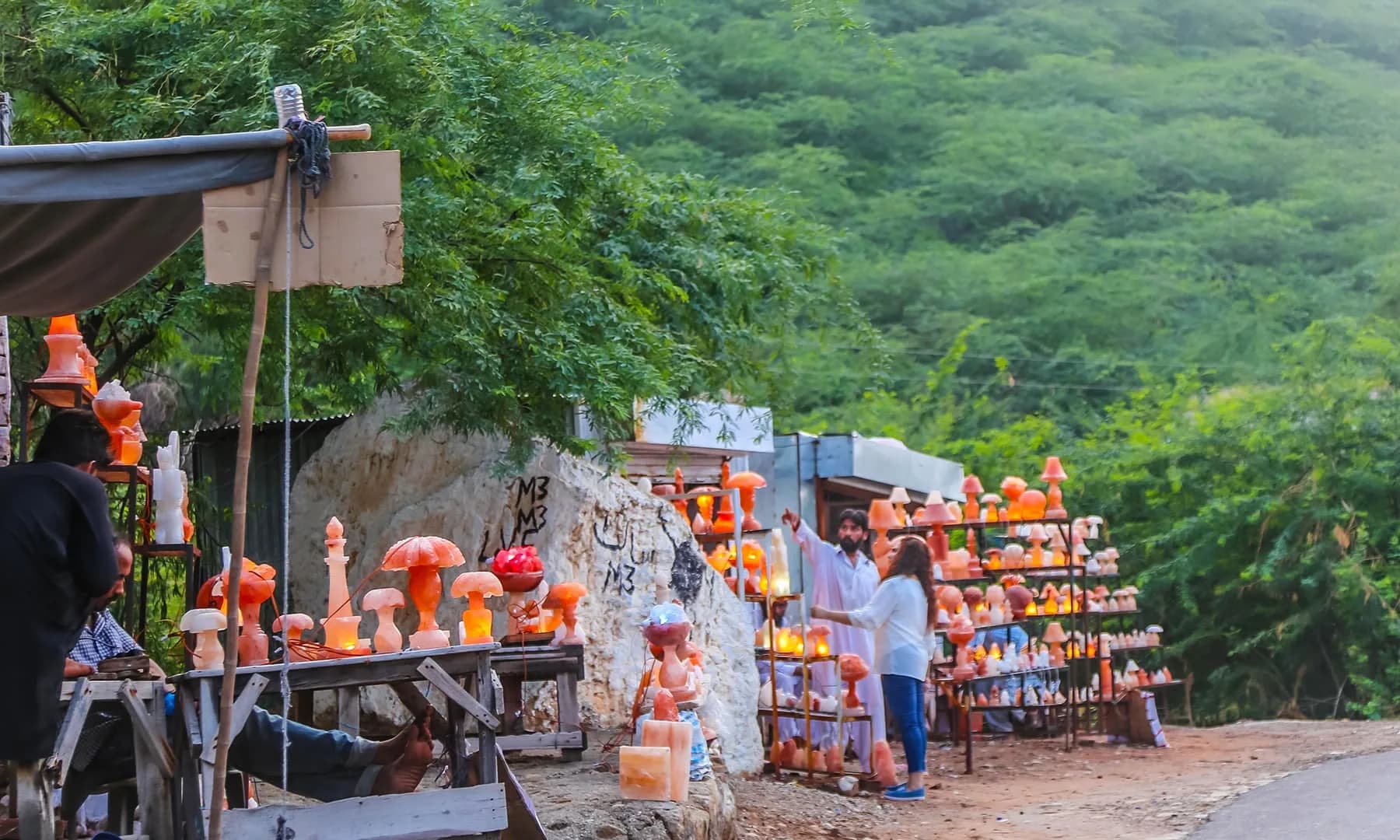
Edible pink rock salt is the best-known retail product. White industrial salt goes to chemical plants, water treatment, and road de-icing. Decorative items include salt lamps, candle holders, bricks, and tiles.
Kala namak (black salt) is processed from Khewra rock salt heated with spices. The sulphurous aroma and dark colour come from that process, not from a separate black rock layer in the mine.
The gift shop at the mine entrance sells smaller quantities for tourists. Bulk orders go through PMDC commercial channels. Global supermarket brands often buy Pakistani rock salt and repackage it abroad.
- Himalayan pink rock salt (edible, export and domestic)
- White industrial salt (chemical and road use)
- Kala namak / black salt (processed product)
- Salt lamps, bricks, and decorative blocks
- Spa and construction-grade salt crystals
Historical importance of Khewra rock salt
Salt from the Salt Range supplied Punjab kitchens and preservation needs for centuries before modern industry. Trade routes crossed these hills long before British engineers mapped the Khewra dome in 1872.
Under colonial administration, rail links moved salt to Punjab markets at industrial scale. After independence, PMDC made Khewra a cornerstone of Pakistan's domestic rock salt supply.
Pink salt's global retail popularity grew in recent decades, but the geological deposit itself is ancient. Khewra's role is extraction and primary processing — not the global branding seen on foreign supermarket shelves.
Where Khewra salt goes after the mine
PMDC sorts salt by crystal size, colour intensity, and intended use after crushing. Fine grains go to table salt packs. Larger crystals become lamp blocks or industrial bulk bags.
Export buyers specify mesh size and moisture content. Food-grade batches pass hygiene checks before shipment. Industrial grades skip those steps and ship in bulk.
For a full product breakdown, see products and salt types. Visitors can see and buy salt products at the tourist resort gift shop near the entrance.
Sources
More in Explore
Related guides
Frequently asked questions
Is Khewra pink salt real?
Why is Himalayan salt pink?
Where does Khewra pink salt come from?
What is the difference between pink and white salt at Khewra?
Is black salt from Khewra?
Does Khewra export pink salt?
Can you buy Khewra salt at the mine?
Planning a visit?
Practical visitor information for Khewra Salt Mine in Punjab, Pakistan.
Plan your visit